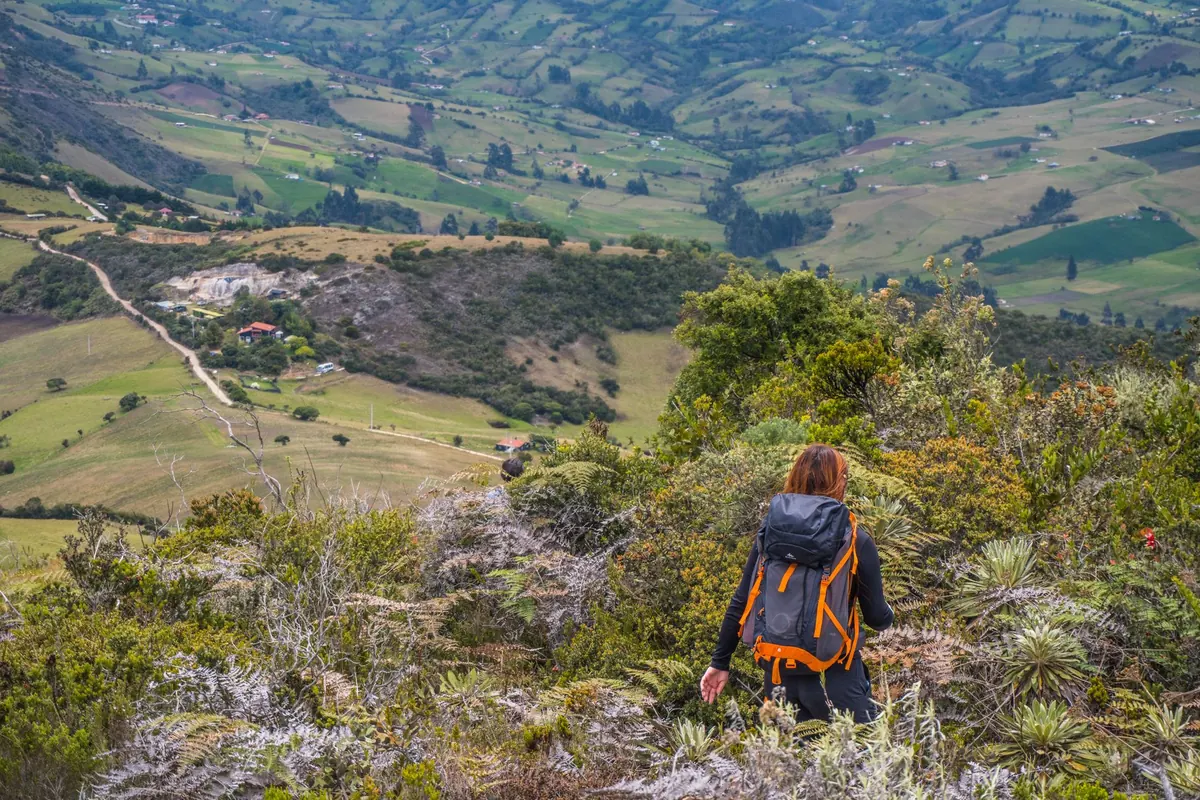
Checklist: What to Pack for a Full-Day Country Hike in Changeable Weather
A season-by-season packing checklist for a full day on rural trails: layers, waterproofs, navigation,...

The low stone bridge at the end of the lane looks medieval, and half the village will tell you it was built by monks. The other half says Victorians. Both stories can be tested, and testing them is far more interesting than arguing about it. Village history is not locked in a university tower. Most of it sits in county record offices and free online archives, written in handwriting that becomes readable after an afternoon of practice. What follows is a beginner's route through the three workhorses of local research: historic maps, parish registers and census returns.
Before you touch a single document, talk to people. Anyone born before the 1950s is a primary source for field names, old footpaths, which cottage kept a shop, and where the well stood. Write down who told you what, and when. Memory drifts, and a note dated twenty years ago is worth more than a confident recollection today.
While you are at it, collect the paper trail that already exists: parish council minutes, old school log books, churchwardens' accounts, photographs, a village history written in 1975 by someone who is no longer here to be asked. Local history societies often hold all of this and are usually delighted to have a new pair of hands.
Maps answer questions that documents cannot. Start with Ordnance Survey editions from the late nineteenth and early twentieth centuries. The six-inch series covers the whole country; the larger 25-inch series is the one you want, because it shows individual buildings, orchards, pumps and footpaths. Compare an 1890s sheet with a 1950s sheet and then with a modern satellite view. Buildings appear, farms split, a lane becomes a road, and a pond quietly disappears.
For the early nineteenth century, tithe maps are the best gift a village researcher gets. The Tithe Commutation Act of 1836 triggered a survey of most parishes, and the accompanying apportionment lists every plot with its owner, its occupier and what the land was used for. It is a full parish census of land, tenant by tenant. Enclosure award maps, estate maps and railway plans fill other gaps.
An apportionment entry might read: Plot 214, cottage and garden, one rood twelve perches, owner — the Rector, occupier — John Beale.
Read maps for shapes, not just names. A straight, ruler-straight hedge usually belongs to a planned enclosure. A field with curving boundaries and a name like Long Meadow or Kiln Close is often older. Field names are their own archive.
In England, parish registers began in 1538, though survival is patchy for the earliest decades. They record baptisms, marriages and burials, and they are the only continuous source for ordinary families before civil registration started in 1837. Expect gaps, particularly around the 1640s and 1650s when the upheavals of the period disrupted many parishes.
Two things slow beginners down. The first is handwriting: sixteenth and seventeenth-century secretary hand looks like code until you have seen a few pages. The second is Latin, which was used in many registers until the 1730s. Both are learnable. Read the register for the year you already know well, where you can guess the names, and build from there.
Where the original register is lost or damaged, check the bishop's transcripts — copies sent to the diocese, sometimes covering years the parish copies do not.
The first census useful for family research is 1841, but it is thin: names, occupations, and ages rounded down to the nearest five years. From 1851 you get relationship to the head of household, exact age and parish of birth, which is what lets you push back into the registers with confidence. Later returns stay closed for a set period, usually a hundred years, so the most recent one available in Britain is 1921.
Suppose you want to know who lived in a half-derelict cottage at the end of the lane. A workable order of attack looks like this:
Each source tells you where to look next. This is the whole method: one document gives you a name, a date or a place, and that detail becomes a search term.
Your county record office or local studies library is the centre of gravity. Most are free to visit, though you will usually need a reader's ticket and photographic identification. They hold parish registers, tithe maps, estate papers and poor law records, and staff who know the collections better than any search engine.
Online, the National Library of Scotland's map collection covers the whole of Britain and is free to search. FamilySearch and the FreeBMD and FreeREG projects cost nothing. Commercial genealogy sites charge for access to census images, so it is worth checking whether your library offers free access from its computers before subscribing. If you plan to publish anything, check who holds copyright and whether reproduction fees apply.
Record every source you check, including the ones that tell you nothing. A note saying "searched 1841 to 1901, no sign of the family" saves you repeating the work in three years' time. Photograph documents, label the files with the archive reference, and transcribe names as you find them rather than trusting memory later.
Then write it up. A short piece for the parish magazine, a page of notes for the village website, a walk with neighbours past the places you have identified. Be thoughtful about living people and recent records, and keep the private things private. Local history only survives when it is shared, and the person most likely to thank you is the one who starts asking the same questions in twenty years.
Photo: Arturo A / Pexels
A season-by-season packing checklist for a full day on rural trails: layers, waterproofs, navigation,...
A practical guide to housing, feeding, milking, and the daily routine that keeps a family milk goat...
A practical guide to organizing a rural tool-sharing circle: recruiting a few neighbors, cataloging...